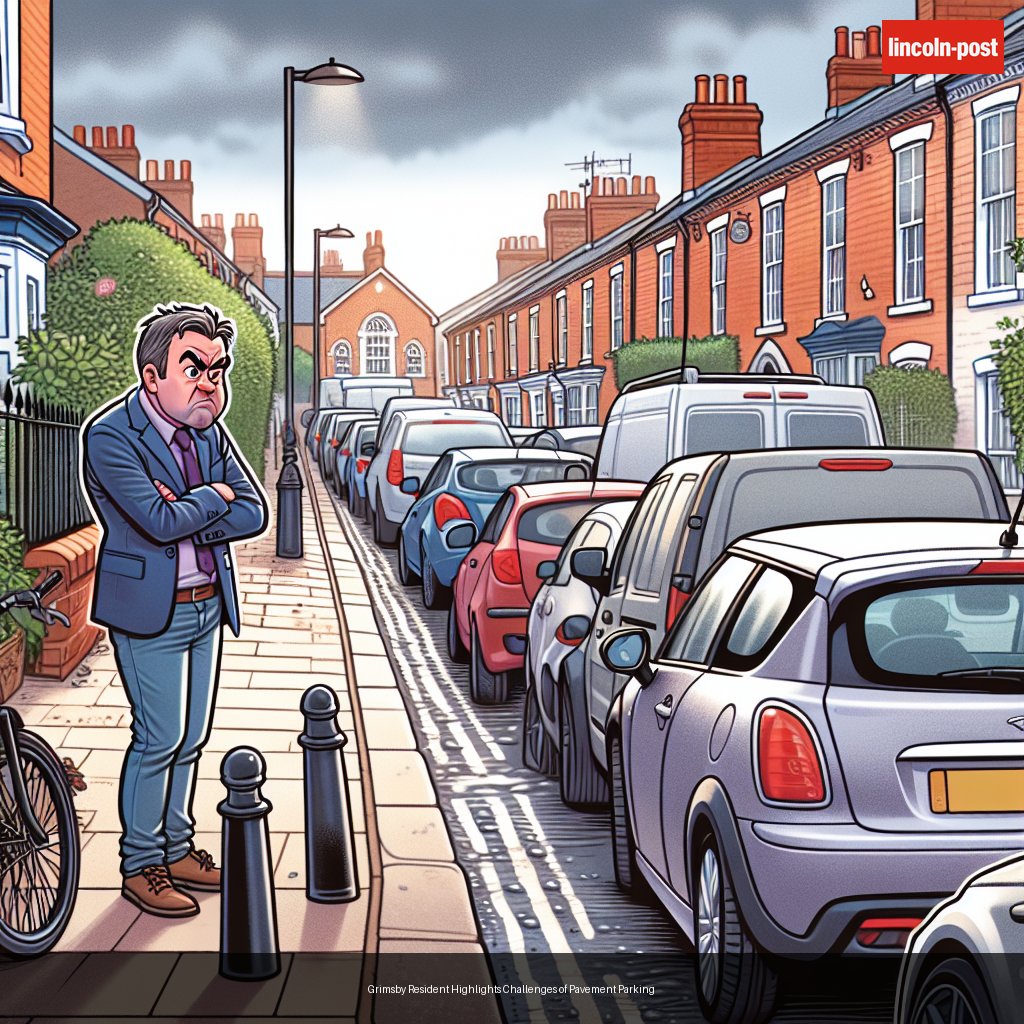
A visually impaired wheelchair user from Grimsby has shared her relief at the newly introduced government measures to tackle pavement parking. However, she emphasises the need for stringent local council enforcement. Julie Pilsworth often faces difficulties manoeuvring into the road or even becomes housebound due to motorists ignoring existing restrictions in her area. “It’s usually impossible when we venture out,” she mentioned. “It’s very disheartening and frustrating, and on several occasions, I’ve returned home in tears.” Forthcoming this year, local councils across England will be granted extended powers to penalise motorists. North East Lincolnshire Council is already committed to banning pavement parking and is awaiting further information from the government.
Julie discussed incidents where obstructed pavements prevented her from visiting shops or her doctor’s clinic. This causes more than just inconvenience – it leads to feelings of isolation when everyday tasks become insurmountable. At present, pavement parking doesn’t typically constitute an offence unless local restrictions like double yellow lines or Traffic Regulation Orders (TROs) are implemented. Julie noted that despite some areas in Grimsby having these restrictions, they are often overlooked. Although in agreement with the government’s plan to grant new powers, she maintains that enforcement is vital. “We require appropriate measures because the lives of pedestrians are jeopardised daily when they are forced onto the road,” she stated. “There ought to be a system to report pavement parking obstructions via an app, website or email, enabling parking enforcement to act.”
Guide Dogs, a prominent charity for individuals with sight loss, has advocated regarding this issue for years and applauded the recent announcement, but requested more explicitness. Chris Theobald, Senior Policy Manager, remarked, “We’re really pleased that there will be some action on pavement parking after over five years of active campaigning. We believe there should be a lucid regulation, which has been active in London since the 1970s and now in Scotland, that’s clearer for motorists and pedestrians alike, ensuring everyone understands that pavements are for people.” In August of the previous year, North East Lincolnshire’s councillors universally agreed to prohibit pavement and verge parking. An authority representative commented, “We welcome the government’s response to the pavement parking consultation and we await further details of what this means for councils. Our enforcement officers regularly patrol areas where TROs are currently in place across North East Lincolnshire, and where suitable, take enforcement action. Officers have also considered how this can be applied to other parts of the area and, most recently, how the government’s latest response might impact these plans.”
This story was adapted by The Lincoln Post from original reporting by www.bbc.com.